Archive


Study visit to Pécs within the DINAMIC DANUBE project: Strengthening local food chains and circular practices
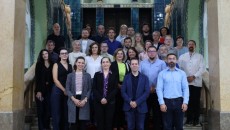
As part of the DINAMIC DANUBE project, a study visit to Pécs, Hungary, was organised from 2 to 4 June 2026, with the aim of exchanging good practices and strengthening cooperation in the fields of sustainable food production, local value chains and the circular economy in the food sector. The study visit brought together representatives of SERDA and the Ministry of Economy of Sarajevo Canton, who, during the three-day programme, had the opportunity to learn about innovative models of food production, processing and distribution, as well as examples of successful local initiatives in the Baranya region and the city of Pécs.


The programme included a series of site visits, workshops and discussions with local producers, clusters and organisations contributing to the development of sustainable food systems.
Participants visited Gastrochili, a family-run business specialising in growing chilli peppers and producing handcrafted sauces, where an integrated “from field to product” production model was presented. This was followed by a visit to MecseKecske Farm, which produces natural goat dairy products using traditional methods, as well as a presentation of MikroZöldség Farm, which specialises in year-round microgreen production.
A particular segment of the programme was dedicated to Pécsi Kosárközösség (Pécs Basket Community), an initiative that connects local producers directly with consumers through a sustainable, seasonal and local food supply model.
The visits also showcased examples of good practice such as Kozma Méhészet, a producer of natural honey, and Reggeli, a restaurant that actively cooperates with local producers and promotes short food supply chains.
Another focus of the study visit was institutional and cluster cooperation, including presentations of the Baranya Gastro Cluster and the iFood Cluster, which bring together producers, research institutions and the private sector with the aim of strengthening innovation and the competitiveness of the food industry.
The CIREVALC project was also presented, promoting circular economy models in regional value chains in the food, catering and packaging sectors through capacity building and policy development.
The study visit to Pécs confirmed the importance of connecting local stakeholders, innovation and sustainable models in the development of food systems, while providing valuable guidance for improving practices across the Danube Region through the DINAMIC DANUBE project.