Archive


Cashless Payments Initiative “Better Way” Launched in Bosnia and Herzegovina
Memoranda Signed with the Ministry of Finance of Republika Srpska and the Federal Ministry of Trade.


The implementation of the Cashless Payments Initiative “Better Way” has officially commenced in Bosnia and Herzegovina following the signing of Memoranda of Understanding between project partners and the Ministry of Finance of Republika Srpska and the Federal Ministry of Trade.
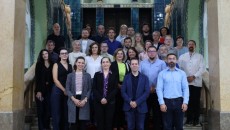
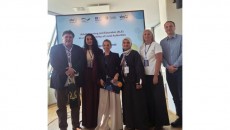
Representatives of the Ministry of Finance of Republika Srpska and the Federal Ministry of Trade signed Memoranda of Understanding with the partners of the Better Way initiative, marking the official launch of activities aimed at advancing digital payments and financial inclusion across Bosnia and Herzegovina.
The Ministry of Finance and Treasury of Bosnia and Herzegovina has expressed its full support for the initiative and its implementation.
The project is implemented by the Chamber of Commerce and Industry of Republika Srpska (PKRS) and the Sarajevo Regional Development Agency (SERDA). It is carried out within the framework of the develoPPP programme of the German Federal Ministry for Economic Cooperation and Development (BMZ), implemented by GIZ and co-financed by Mastercard and Visa. The National Alliance for Local Economic Development (NALED) acts as a project partner and knowledge provider.
The Memorandum with the Ministry of Finance of Republika Srpska was signed on 17 June in Banja Luka, while the Memorandum with the Federal Ministry of Trade was signed on 18 June in Sarajevo.
Speaking on the occasion, Zora Vidović, Minister of Finance of Republika Srpska, emphasized that the Better Way project is fully aligned with the strategic priorities of the Government of Republika Srpska, particularly in the areas of digitalisation, cashless payments, reduction of the informal economy, financial education, and improved access to financial services for citizens and businesses.
Federal Minister of Trade Amir Hasičević highlighted that the project aims to support the deployment of up to 7,500 POS terminals for small and medium-sized enterprises across Bosnia and Herzegovina, representing an increase of approximately 40 percent in the number of payment terminals available in the country. He noted that the initiative will help micro, small and medium-sized enterprises adopt electronic payments more easily, reduce operational costs, and improve their competitiveness in both domestic and international markets.
The Better Way initiative is a regional programme focused on improving the conditions for the development of cashless payments, strengthening financial literacy, and supporting the digital transformation of micro, small and medium-sized enterprises.
Project activities include support for policy development and institutional frameworks for electronic payments, promotion of financial inclusion, education of businesses and citizens on the benefits of cashless payments, and the expansion of POS infrastructure in cooperation with banks, fintech companies, and technology partners.
Representatives of Visa and Mastercard stressed that Bosnia and Herzegovina has significant potential for the development of electronic payments and a faster transition towards a digital economy.
According to Mastercard, Bosnia and Herzegovina currently has 10.6 POS terminals per 1,000 inhabitants, compared to 31.7 in the European Union. An analysis conducted by EY and Mastercard indicates that electronic payments contribute €454 million to the country’s GDP, support the creation of approximately 21,300 jobs, and generate €163 million in tax revenues. Through the Better Way initiative, project partners aim to facilitate the introduction of 7,500 new POS terminals over the next three years, with a particular focus on small businesses, merchants, and public institutions.
Visa representatives highlighted that, according to the latest World Bank Global Findex 2025 data, only 62% of adults in Bosnia and Herzegovina currently use digital payments. At the same time, Visa’s research conducted in March 2025 showed a strong correlation between the adoption of digital payments and business growth, with 65% of businesses reporting increased sales and 67% reporting growth in their customer base after introducing digital payment solutions.
A special focus of the initiative will be placed on increasing the availability of digital payment solutions for small businesses, particularly in smaller municipalities and rural areas.
“Digital payments simplify business operations, save time, and improve competitiveness. Through the Better Way initiative, GIZ, on behalf of the Government of the Federal Republic of Germany, supports businesses across Bosnia and Herzegovina, particularly in smaller communities and rural areas, in gaining easier access to modern digital payment solutions. The initiative also promotes financial education and responsible financial management, thereby contributing to greater financial inclusion for small businesses and citizens,” said Daniel Bagwitz, GIZ Country Director for Bosnia and Herzegovina.
The Better Way initiative builds on the successful experience of the programme implemented in Serbia between 2021 and 2025. Through the POS Programme, nearly 10,000 small businesses introduced card, instant, and online payments with subsidised support, while the volume of cashless transactions increased by approximately 20% annually. The initiative also contributed significantly to financial inclusion, business digitalisation, and improvements in the regulatory environment.
In Bosnia and Herzegovina, activities will focus on improving policies for digital payments and financial inclusion, expanding POS infrastructure in cooperation with financial institutions and industry partners, promoting secure digital financial solutions, and educating citizens and businesses about the benefits of electronic payments, financial literacy, and responsible financial management.
Public awareness and communication activities will be implemented by PKRS and SERDA in cooperation with all project partners.
“Through its long-standing work with micro and small enterprises, SERDA has recognised the need for stronger support in business digitalisation, which is one of the key prerequisites for growth, competitiveness, and long-term sustainability. The Better Way initiative provides small merchants with an opportunity to introduce cashless payments under favourable conditions, improve service quality, expand their customer base, and better respond to the demands of the modern market. We believe this project will accelerate the digital transformation of small businesses, strengthen financial inclusion, and contribute to creating a more favourable business environment, thereby supporting the development of the digital economy in Bosnia and Herzegovina,” said Sanela Dževlan, Director of SERDA.
Goran Račić, President of the Chamber of Commerce and Industry of Republika Srpska, emphasized that the initiative represents an important step towards modernising business operations and expanding digital payment methods, enabling businesses to operate more efficiently and compete more successfully in the marketplace.
The Cashless Payments Initiative “Better Way” is planned to run until the end of 2028 and represents an important step towards modernising the payment ecosystem, strengthening the competitiveness of the digital economy, and improving the business environment in Bosnia and Herzegovina.